
 Image 1 of 1
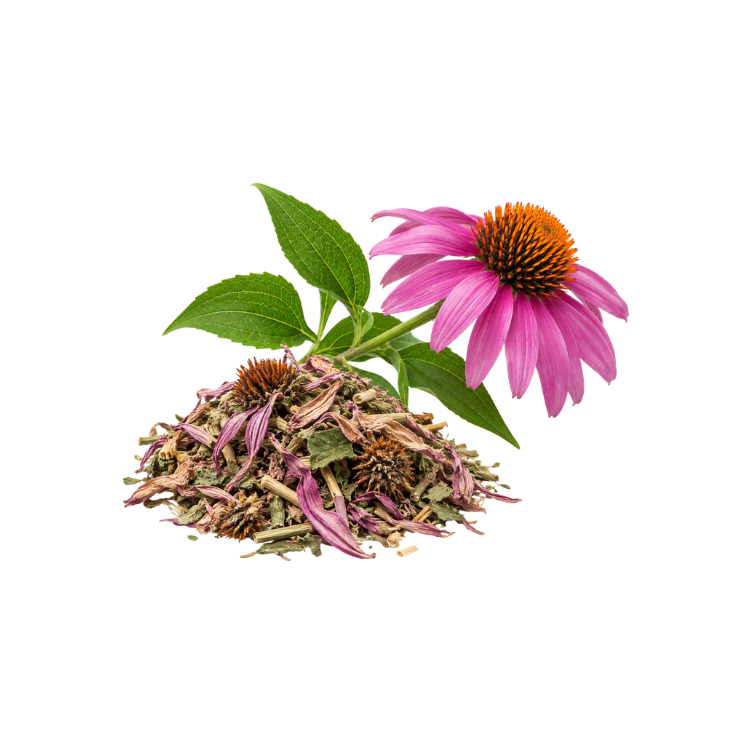
Echinacea **Dried Herb 4oz**
Scientific Name: Echinacea purpurea
Common Names: Echinacea, Purple Coneflower, Eastern Purple Coneflower, Purple Echinacea, Coneflower
Botanical Family: Asteraceae (Daisy Family)
Plant Parts Used: Dried aerial parts, including flowers, leaves, and stems
Primary Application: Internal use — traditionally prepared herbal teas, botanical infusions, and extracts; external use — botanical baths, herbal compresses, skin washes, and ceremonial uses
Medicinal Properties & Traditional Uses
Immune Support: Contains naturally occurring alkamides, polysaccharides, and phenolic compounds investigated for their potential immune-modulating properties.
Cold & Respiratory Support: Traditionally used during seasonal colds and upper respiratory illnesses. Certain echinacea preparations may modestly reduce the likelihood of developing a cold, although clinical findings remain mixed.
Anti-inflammatory: Contains chicoric acid, alkamides, and other botanical compounds investigated for their potential inflammation-modulating properties.
Antioxidant: Rich in phenolic compounds and caffeic acid derivatives that demonstrate antioxidant activity and may help protect cells against oxidative stress.
Antimicrobial: Echinacea extracts demonstrate antibacterial and antifungal activity against certain microorganisms in laboratory studies.
Antiviral: Certain echinacea preparations demonstrate antiviral activity in laboratory research, although their effectiveness against viral infections in humans remains uncertain.
Wound Healing: Traditionally used in botanical preparations intended to support the healing of minor cuts, abrasions, and superficial skin injuries.
Skin Health: Traditionally incorporated into herbal washes, compresses, and topical preparations intended to soothe minor irritation and support skin restoration.
Lymphatic Support: Traditionally regarded by Western herbalists as a lymphatic and alterative herb used in practices intended to support the body's natural cleansing processes; clinical benefits remain unproven.
Throat Comfort: Historically incorporated into herbal preparations intended to soothe minor throat discomfort associated with seasonal respiratory illnesses.
Tissue Restoration: Certain echinacea extracts have demonstrated potential wound-healing and tissue-repair activity in preliminary laboratory and animal research.
Seasonal Wellness: Traditionally valued as a botanical used during seasonal changes, periods of increased physical stress, and times of heightened concern about respiratory illness.
Magickal Correspondences & Uses:
Planet: Jupiter & Mars
Days of the Week: Thursday & Tuesday
Element: Earth/Fire
Chakra: Solar Plexus & Root
Astrological Signs: Sagittarius & Scorpio
Spiritual Protection: Symbolically strengthening energetic defenses, reinforcing spiritual boundaries, and guarding against unwanted influences.
Healing & Restoration: Supporting spiritual intentions involving renewal, emotional restoration, recovery, and the replenishment of personal vitality.
Strength & Resilience: Encouraging perseverance, adaptability, courage, and the ability to overcome challenging circumstances.
Magickal Amplification: Traditionally incorporated into contemporary spellwork to symbolically strengthen intentions, reinforce rituals, and increase the energetic influence of spiritual workings.
Personal Empowerment: Encouraging confidence, determination, self-reliance, and the courage to express personal authority.
Prosperity & Abundance: Supporting intentions involving financial growth, favorable opportunities, material security, and the expansion of personal resources.
Grounding & Stability: Symbolizing a strong connection with the Earth, emotional steadiness, security, and the ability to remain centered during difficult experiences.
Energetic Fortification: Representing the strengthening of one's spiritual foundation, personal boundaries, and ability to withstand external pressures.
Courage & Victory: Supporting intentions to confront fears, overcome obstacles, and pursue meaningful goals with confidence and determination.
Renewal & Transformation: Symbolizing the restoration of strength, the release of limiting patterns, and the emergence of new possibilities following adversity.
Spiritual Cleansing: Incorporated into contemporary rituals intended to release stagnant energy, remove unwanted influences, and restore energetic balance.
Endurance & Perseverance: Encouraging commitment, patience, inner fortitude, and the ability to remain dedicated to long-term intentions and goals.
The Sacred Flower of Protection, Resilience & Empowered Healing
Echinacea is a powerful botanical associated with spiritual protection, personal empowerment, healing intentions, resilience, and the restoration of vitality. Its beautiful purple-pink petals surrounding a strong, spiny central cone symbolize the balance between beauty and strength, gentleness and protection, and the ability to flourish while maintaining firm boundaries. Native to North America, Echinacea has a rich history of medicinal use among Indigenous communities. Its contemporary spiritual symbolism celebrates the enduring strength and adaptability of this remarkable prairie flower.
Its vibrant purple blossoms represent spiritual awareness, dignity, transformation, and the courage to embrace personal growth. Through its symbolic connection with Jupiter, Echinacea embodies expansion, abundance, wisdom, protection, and the confidence to pursue greater possibilities. Its Mars association represents determination, courage, energetic strength, and the will to overcome adversity. The element of Earth symbolizes grounding, stability, and resilience, while Fire represents vitality, transformation, and empowered action. Its connection to the Solar Plexus Chakra encourages confidence, personal authority, and self-worth, while its Root Chakra association reinforces stability, security, and spiritual protection.
In contemporary spiritual herbalism, dried Echinacea flowers and leaves are incorporated into protection sachets, empowerment jars, spiritual baths, altar arrangements, prosperity workings, and rituals intended to strengthen intentions, restore balance, and encourage perseverance. Echinacea is particularly suited to spiritual practices focused on protection, resilience, healing intentions, courage, personal empowerment, prosperity, and the restoration of inner strength.
Neuroaffirmative Statement for Prayer & Ritual Use:
I am grounded in my power, protected by my wisdom, and strengthened by every experience that contributes to my growth. My mind is clear, my spirit is resilient, and my body is supported by the healthy choices I make each day. I release fear, self-doubt, and outdated patterns that no longer serve my highest good. My boundaries are strong, my intentions are focused, and my confidence grows through purposeful action. I possess the courage, wisdom, and determination to overcome challenges and transform obstacles into opportunities. My energy is balanced, my decisions are empowered, and my actions align with the life I am creating. I welcome vitality, prosperity, meaningful opportunities, and beautiful new beginnings. Each day, I become stronger, wiser, more resilient, and more confident in my ability to flourish, succeed, and live fully in alignment with my highest potential.
Safety Warnings & Contraindications
Drug & Herbal Interactions
Use caution with:
Immunosuppressant Medications: Tacrolimus, cyclosporine, mycophenolate, azathioprine, and other medications used to suppress immune system activity. Echinacea may theoretically interfere with their intended effects because of its potential immunomodulatory activity.
Chemotherapy & Cancer Medications: Etoposide and certain other cancer treatments require particular caution. A serious decrease in platelet counts has been reported in a patient receiving etoposide while using echinacea. Potential interactions with other cancer medications remain incompletely understood.
Medications Metabolized by the Liver: Certain medications processed through cytochrome P450 enzymes, particularly CYP3A4 and CYP1A2, may interact with echinacea preparations. Human research has produced inconsistent findings, and the clinical significance remains uncertain.
Caffeine & Stimulant Products: Echinacea may influence caffeine metabolism, theoretically increasing or prolonging effects such as nervousness, restlessness, and difficulty sleeping. Clinically significant interactions have not been firmly established.
Immune-Modulating Herbs & Supplements: Astragalus, medicinal mushroom extracts, and other botanicals used for immune support may have overlapping biological activity. The safety of combining multiple concentrated immune-active preparations has not been adequately studied.
Prescription Medications: Clinically significant interactions from traditional dried echinacea infusions have not been well established. Individuals taking prescription medications should consult a healthcare professional before regular medicinal use.
Important: Dried Echinacea has a long history of traditional use in herbal teas, botanical preparations, and medicinal practices. Certain echinacea preparations are generally well tolerated by healthy adults when used for short periods. However, safety and effectiveness depend on the plant species, plant parts, preparation method, quantity, and individual health conditions. Research involving concentrated extracts or fresh-pressed herbal preparations should not automatically be considered evidence of equivalent benefits from dried herbal infusions. Long-term medicinal safety has not been adequately established.
Avoid use or consult a healthcare professional if:
Pregnant, trying to conceive, or breastfeeding, because sufficient safety information regarding medicinal use is unavailable.
Diagnosed with an autoimmune condition such as lupus, multiple sclerosis, rheumatoid arthritis, or another disorder involving abnormal immune system activity.
Taking immunosuppressant medications or receiving treatment following an organ or tissue transplant.
Living with an immunodeficiency disorder, including HIV/AIDS, or another condition associated with impaired immune function.
Diagnosed with tuberculosis, leukemia, or another progressive systemic disorder or disease affecting white blood cells.
Receiving chemotherapy, radiation therapy, or other medical treatments that may affect immune function or blood cell counts.
Allergic to ragweed, chrysanthemums, daisies, chamomile, marigolds, arnica, or other plants in the Asteraceae family.
Living with asthma, severe seasonal allergies, or a history of serious allergic reactions, because echinacea may trigger hypersensitivity reactions in susceptible individuals.
Under 12 years of age. European Medicines Agency guidance does not recommend certain medicinal Echinacea purpurea preparations for younger children because of insufficient safety information.
Living with a significant liver disorder or taking medications that require careful monitoring of blood concentrations.
Preparing for surgery. Inform the surgical team about medicinal echinacea use and follow their recommendations regarding discontinuation.
Experiencing persistent fever, worsening respiratory symptoms, difficulty breathing, or signs of a serious infection requiring professional medical evaluation.
Possible Side Effects: Echinacea may cause nausea, abdominal discomfort, stomach pain, diarrhea, headache, dizziness, itching, skin rash, or other allergic reactions. Rare but serious hypersensitivity reactions, including anaphylaxis, have been reported. Individuals sensitive to plants in the Daisy family may be at increased risk of allergic reactions.
Special Precautions: Use only properly identified, food- or medicinal-grade dried Echinacea when preparing herbal infusions. Echinacea purpurea should not be confused with other medicinal Echinacea species, including Echinacea angustifolia and Echinacea pallida, because their phytochemical compositions and traditional applications may differ. Avoid consuming decorative or florist-grade flowers that may have been treated with pesticides or other chemicals. Do not use Echinacea as a substitute for medical treatment of infections or other serious conditions. Discontinue use if adverse reactions occur. Consult a healthcare professional if respiratory symptoms persist beyond ten days, worsen, or are accompanied by high fever or breathing difficulties.
Keep dried Echinacea flowers and leaves out of reach of children and store in a cool, dry location away from direct sunlight to preserve their botanical quality, color, and freshness.