
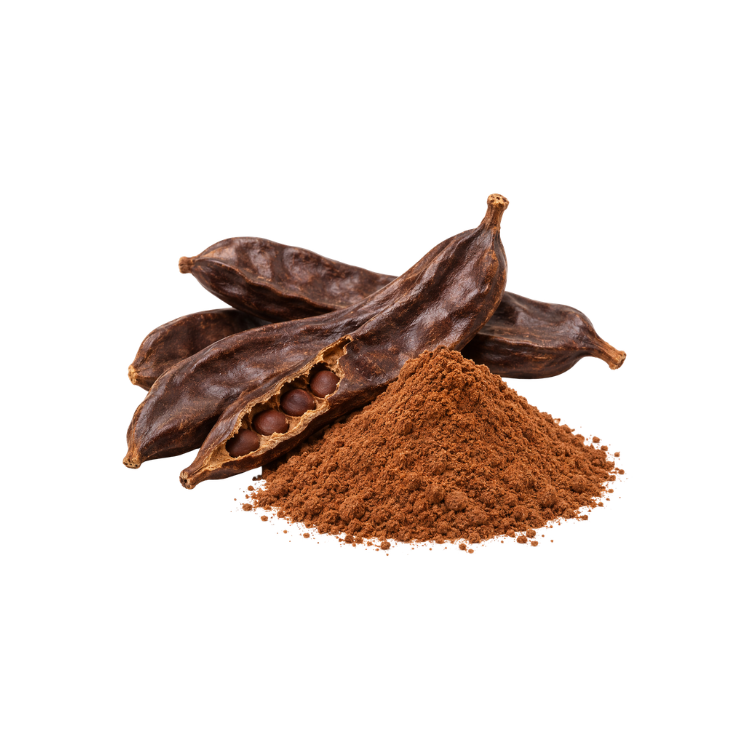
 Image 1 of 1
Carob Powder **4oz**
Scientific Name: Ceratonia siliqua L.
Common Names: Carob, Carob Powder, St. John's Bread, Locust Bean, Algarroba, Carob Tree, Carob Flour
Botanical Family: Fabaceae (Legume Family)
Plant Parts Used: Dried, ground carob pods, primarily the sweet pulp after removal of the seeds
Primary Application: Internal use — culinary powders, herbal beverages, nutritional preparations, smoothies, baked goods, and traditional wellness formulations; external use — ceremonial offerings, prosperity workings, spiritual baths, and ritual preparations
Medicinal Properties & Traditional Uses
Antioxidant: Rich in naturally occurring polyphenols, flavonoids, and tannins that demonstrate antioxidant activity and help protect cells against oxidative stress in laboratory studies.
Digestive Support: Contains dietary fiber traditionally valued for supporting normal digestive processes, intestinal regularity, and gastrointestinal wellness.
Antidiarrheal: Traditionally used to help manage occasional diarrhea. Tannins and certain carob-based dietary preparations have been investigated for their potential stool-firming properties, although clinical evidence for ordinary carob powder remains limited.
Prebiotic Support: Contains dietary fibers that may influence beneficial intestinal bacteria and support the production of short-chain fatty acids through microbial fermentation.
Cardiovascular Support: Certain carob pulp fiber preparations have demonstrated modest cholesterol-lowering effects in human studies. Benefits cannot automatically be attributed to ordinary culinary servings of carob powder.
Cholesterol Support: Contains insoluble dietary fiber and polyphenols investigated for their potential influence on cholesterol metabolism and bile acid binding.
Blood Sugar Support: Contains dietary fiber and naturally occurring D-pinitol, a compound investigated for its possible influence on glucose metabolism and insulin sensitivity. Clinical results vary according to preparation.
Anti-inflammatory: Carob polyphenols and other botanical constituents demonstrate potential inflammation-modulating properties in preliminary laboratory and animal research.
Nutritional Support: Naturally provides dietary fiber and minerals, including calcium and potassium, along with varying amounts of magnesium and other trace nutrients.
Bone Health: Contains calcium and other minerals important for normal skeletal function, although ordinary carob powder consumption has not been demonstrated to prevent or treat bone disorders.
Natural Energy Support: Contains carbohydrates and naturally occurring sugars that provide dietary energy without the substantial stimulant content typically associated with cocoa.
Caffeine-Free Alternative: Traditionally used as a naturally sweet substitute for cocoa and chocolate. Most carob powders contain negligible caffeine and theobromine, making them appealing for individuals seeking to reduce dietary stimulants.
Weight Management Support: Its dietary fiber may contribute to fullness and satisfaction as part of a balanced diet, although carob powder alone has not been proven to promote weight loss.
Metabolic Wellness: Carob-derived fiber, polyphenols, and inositol compounds are being investigated for their potential roles in lipid metabolism, glucose regulation, and overall metabolic health.
Magickal Correspondences & Uses:
Planet: Saturn & Jupiter
Days of the Week: Saturday & Thursday
Element: Earth
Chakra: Root & Solar Plexus
Astrological Signs: Capricorn & Virgo
Prosperity & Abundance: Symbolically attracting sustainable wealth, reliable resources, financial stability, and the gradual accumulation of lasting prosperity.
Grounding & Stability: Encouraging a deeper connection with the Earth, emotional steadiness, security, and confidence in one's ability to create a stable foundation.
Ancestral Wisdom: Representing the knowledge, teachings, traditions, and resources passed from one generation to the next.
Protection: Associated with protective folk practices intended to safeguard health, property, livestock, and the well-being of the household.
Longevity & Endurance: Symbolizing patience, resilience, perseverance, and the ability to withstand life's challenges while continuing to grow and flourish.
Financial Security: Supporting intentions involving responsible financial management, the preservation of resources, and the development of lasting material stability.
Sweetening & Harmony: Symbolically encouraging kindness, cooperation, peaceful communication, and the cultivation of pleasant relationships and circumstances.
Manifestation Through Discipline: Representing the power of consistent effort, practical decisions, and dedicated action in transforming intentions into tangible results.
Generational Wealth: Supporting intentions involving legacy building, financial inheritance, responsible stewardship, and the creation of opportunities for future generations.
Self-Sufficiency: Encouraging resourcefulness, independence, practical wisdom, and the confidence to provide for oneself and one's loved ones.
Nourishment & Restoration: Symbolizing the replenishment of personal resources, emotional fulfillment, contentment, and the ability to receive life's blessings.
Patience & Divine Timing: Encouraging trust in gradual development, the natural cycles of growth, and the wisdom of allowing meaningful accomplishments to mature.
Resilience & Transformation: Representing the ability to transform difficult circumstances into opportunities for growth, stability, and renewed prosperity.
Gratitude & Contentment: Symbolically encouraging appreciation for existing blessings while remaining receptive to greater abundance and fulfillment.
The Sacred Pod of Enduring Prosperity, Ancestral Wisdom & Abundant Nourishment
Carob is a deeply symbolic botanical associated with sustainable prosperity, ancestral wisdom, protection, resilience, and the sacred relationship between nourishment and abundance. Native to the Mediterranean region and parts of the Middle East, the Carob tree has provided food and sustenance for generations, particularly during periods of scarcity and hardship. Its naturally sweet, nourishing pods symbolize the abundance available through patience, resourcefulness, and the wise stewardship of Earth's gifts.
Its rich brown powder represents grounding, stability, nourishment, and the transformation of natural resources into sustaining abundance. Through its symbolic connection with Saturn, Carob embodies discipline, patience, endurance, responsibility, and the creation of lasting foundations. Its contemporary Jupiter association represents prosperity, expansion, generosity, wisdom, and the confidence to cultivate greater opportunities. The element of Earth symbolizes material security, practical achievement, stability, and the ability to manifest intentions through consistent action. Its connection to the Root Chakra encourages grounding, security, and trust in one's ability to provide, while its Solar Plexus association strengthens confidence, personal authority, self-discipline, and empowered decision-making.
In Jewish tradition, the Carob tree carries a particularly meaningful lesson about legacy and responsibility to future generations. A well-known story in the Talmud describes a man planting a Carob tree whose fruit he may never personally enjoy, explaining that just as previous generations planted trees for him, he plants for those who will come after him. This teaching makes Carob a beautiful symbol of generational abundance, patient investment, ancestral gratitude, and the importance of creating blessings that extend beyond one's own lifetime.
Carob also appears in Mediterranean and European folklore, where its pods have been associated with sustenance, protection, and survival. In some traditions, the tree carries more austere Saturnian symbolism, representing endurance, hardship, and the lessons of time. Within contemporary spiritual herbalism, these associations may be interpreted as the transformation of scarcity into resourcefulness and difficulty into enduring prosperity.
Dried Carob powder may be incorporated into prosperity jars, ancestral offerings, abundance rituals, intention-based culinary preparations, altar arrangements, and ceremonial workings focused on financial stability, nourishment, protection, and the creation of lasting legacies. Carob is particularly suited to spiritual practices involving sustainable wealth, grounding, ancestral wisdom, personal resilience, generational prosperity, patience, and the manifestation of a secure and abundant future.
Neuroaffirmative Statement for Prayer & Ritual Use:
I am deeply rooted in abundance, grounded in wisdom, and empowered to create a life of lasting prosperity, stability, and fulfillment. My mind recognizes valuable opportunities, my decisions reflect clarity and confidence, and my actions consistently move me toward greater financial freedom and personal success. I honor the wisdom of those who came before me while embracing my authority to create new possibilities for myself and future generations. I release beliefs rooted in scarcity, limitation, and uncertainty, replacing them with thoughts and behaviors that support abundance, resourcefulness, and purposeful growth. I confidently manage my resources, recognize my inherent worth, and cultivate opportunities that nourish my mind, body, spirit, and material well-being. Prosperity expands through the wisdom of my choices, the consistency of my efforts, and my willingness to receive life's blessings. I am patient with the process of growth, confident in my abilities, and committed to building a legacy of wisdom, security, love, and sustainable abundance. Each day, I become more prosperous in my thinking, more intentional in my actions, and more empowered to create a beautiful, fulfilling life whose blessings extend far beyond my own generation.
Safety Warnings & Contraindications
Drug & Herbal Interactions
Use caution with:
Antidiabetic Medications: Insulin, glipizide, glyburide, metformin, and other glucose-lowering medications. Certain concentrated carob-derived preparations have demonstrated potential effects on glucose metabolism. Additive effects remain theoretical for ordinary carob powder, and clinically significant interactions have not been established.
Thyroid Medications: Levothyroxine and other oral thyroid hormone preparations may be affected by high-fiber foods when consumed simultaneously. Individuals using thyroid replacement therapy should follow medication instructions regarding meal timing and consult a pharmacist before combining medications with large amounts of carob powder.
Oral Medications Sensitive to Dietary Fiber: Large quantities of dietary fiber can influence the absorption of certain oral medications. Although interactions specific to ordinary carob powder have not been well established, individuals taking medications with strict administration requirements should follow prescribed timing instructions.
Fiber Supplements: Psyllium, wheat bran, and other concentrated fiber supplements may increase digestive discomfort, gas, bloating, or changes in bowel habits when consumed alongside large quantities of carob powder.
Other Blood Sugar-Lowering Herbs: Concentrated preparations containing cinnamon, fenugreek, bitter melon, or other botanicals investigated for glucose regulation may have overlapping effects with certain carob-derived preparations. Clinical evidence of interactions remains limited.
Prescription Medications: No consistent pattern of clinically significant drug interactions has been established for carob pod powder consumed in ordinary culinary amounts. Individuals taking prescription medications should consult a healthcare professional before using concentrated or unusually large medicinal quantities.
Important: Carob powder has a long history of culinary use throughout Mediterranean and Middle Eastern food traditions and is generally considered a well-tolerated food ingredient. It naturally contains dietary fiber, polyphenols, and sugars, making it a versatile botanical ingredient for beverages, baking, and nutritional preparations. However, the nutritional and physiological properties of ground carob pods differ from those of isolated carob seed gum, purified fiber supplements, and concentrated extracts. Clinical findings involving these specialized preparations should not automatically be attributed to ordinary carob powder.
Avoid use or consult a healthcare professional if:
Allergic to Carob or diagnosed with a confirmed sensitivity to Ceratonia siliqua. Rare allergic reactions to carob have been reported.
Living with a legume allergy, particularly if previous reactions have occurred after consuming carob or related products. A legume allergy does not automatically indicate an allergy to every legume; individual evaluation may be appropriate.
Pregnant, trying to conceive, or breastfeeding when considering medicinal quantities or concentrated preparations. Ordinary culinary consumption is generally treated as food use, but safety information for supplemental doses remains insufficient.
Diagnosed with diabetes or managing blood glucose levels, particularly when consuming large amounts of naturally sweetened carob preparations.
Living with a digestive disorder requiring careful dietary fiber management, such as an active intestinal obstruction, severe gastrointestinal narrowing, or certain inflammatory bowel conditions.
Experiencing chronic constipation, significant bloating, or digestive sensitivity that may be aggravated by sudden increases in dietary fiber.
Following a medically prescribed low-fiber diet or another therapeutic dietary restriction.
Taking thyroid medication or other medications that require separation from high-fiber meals.
Managing a significant chronic medical condition that requires individualized nutritional guidance.
Providing concentrated medicinal preparations to infants or young children without guidance from a qualified healthcare professional. Ordinary age-appropriate culinary use is a separate consideration.
Possible Side Effects: Carob powder is generally well tolerated when consumed in ordinary food quantities. Excessive consumption or a sudden increase in dietary fiber may cause bloating, gas, abdominal discomfort, constipation, or changes in bowel habits. Rare allergic reactions may include itching, rash, swelling, wheezing, or other hypersensitivity symptoms. Individuals managing blood sugar should consider the naturally occurring carbohydrate and sugar content of carob powder.
Special Precautions: Use only properly identified, food-grade Carob powder derived from Ceratonia siliqua pods. Carob powder is typically prepared from dried and sometimes roasted pod pulp after the seeds have been removed. It should not be confused with locust bean gum, which is a separate ingredient produced from the seeds of the Carob tree. Although Carob is naturally gluten-free, individuals with celiac disease or severe gluten sensitivity should verify that the product has not been exposed to cross-contact during processing or packaging. Individuals with diabetes should account for its carbohydrate content when incorporating it into beverages, desserts, or other foods. Introduce larger servings of Carob powder gradually and maintain adequate hydration to support normal digestive function. Discontinue use if adverse reactions occur and consult a healthcare professional if symptoms persist or worsen.
Keep Carob powder securely packaged and store in a cool, dry location away from direct sunlight, excessive heat, and moisture to preserve its flavor, freshness, and botanical quality.